Problem-solving makes most of your problems worse.
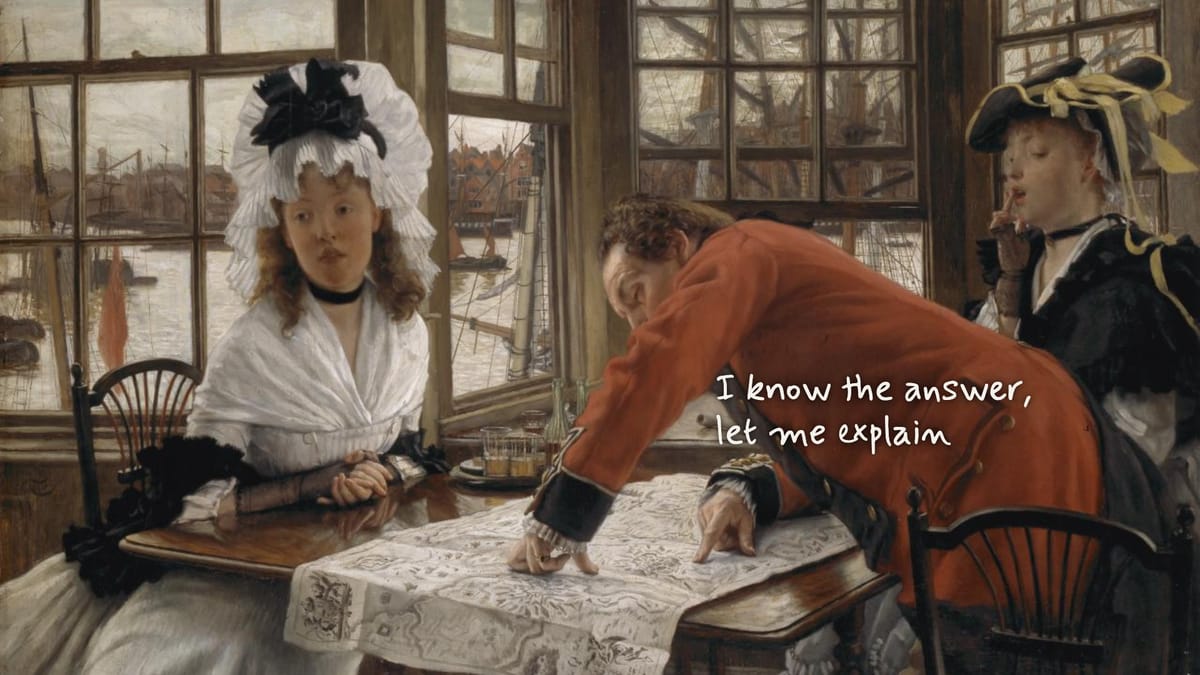
Three years ago, on one of my coach-training calls, a peer, the CEO of a family business, asked for support to solve his overwhelm. This was a practice session where we coached each other and got feedback.
He said: "I have to train this new person on talking to customers, I have to make a lot of decisions about budget, I have to talk to my team about our process. Honestly, it's just too much in my head. I'd appreciate any help on handling this."
My inner I-know-the-answer Hermione Granger woke up. I raised my hand to coach him. I can help with this. I've been there, working out how to navigate the too-much-ness of work. Easily fixable problem with some tweaks.
Me: "What have you already done towards this?" (a classic coaching question)
Him: "Well, I've been thinking a lot about this. I think I struggle with saying no and need to do some hard prioritization."
It made sense to me. I had only a few minutes to coach him. So I tugged on my inner Hermione a bit harder and said:
"Try clarifying your vision and goals, and why saying 'no' matters for that. That'll motivate you to say the 'no' when you have to. What do you think?"
I saw him taking notes. It looked like I was nailing this.
Then it was time for feedback from my coach, who was watching this whole conversation.
"Did you see how he was ready to take on what you gave him as the next task? He says he's overwhelmed yet took another exercise from you. What made you give him more work?"
This is problem-solving making things worse. My advice gave an overwhelmed mind one more thing to do. And it hid the real information: he takes on more even when he says it's too much.
Underneath my advice was the assumption that we had found the right problem to solve.
Do you know the best solution to any problem?
Not needing to solve it is the best solution.
He was already deep enough in the problem to bring it to a coaching session, though. So we go to the next best solution: investigate the hidden system generating the problem in the first place.
In the people I coach, I often find the root cause in their old thinking patterns. I call them legacy loops: the hidden thinking systems that keep us trying harder while staying in the exact same place.
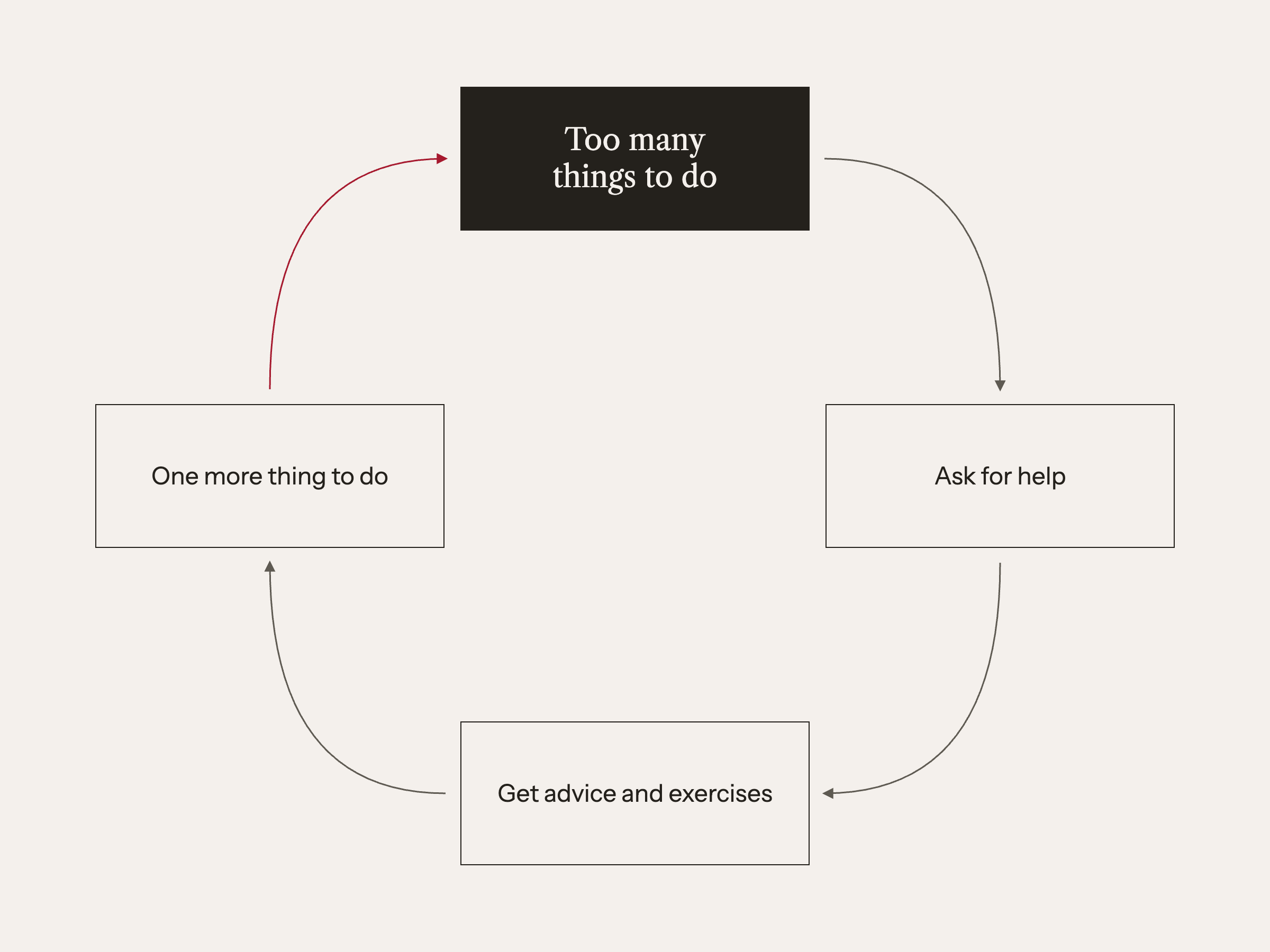
Here we're starting to see my peer's legacy loop.
Too many things to do → ask for help → get advice and exercises → one more thing to do → Too many things to do
And funnily, we're seeing mine too.
"I know the answer" → give advice → he takes it or pushes back → I solved it, or I find a better answer → "I know the answer"
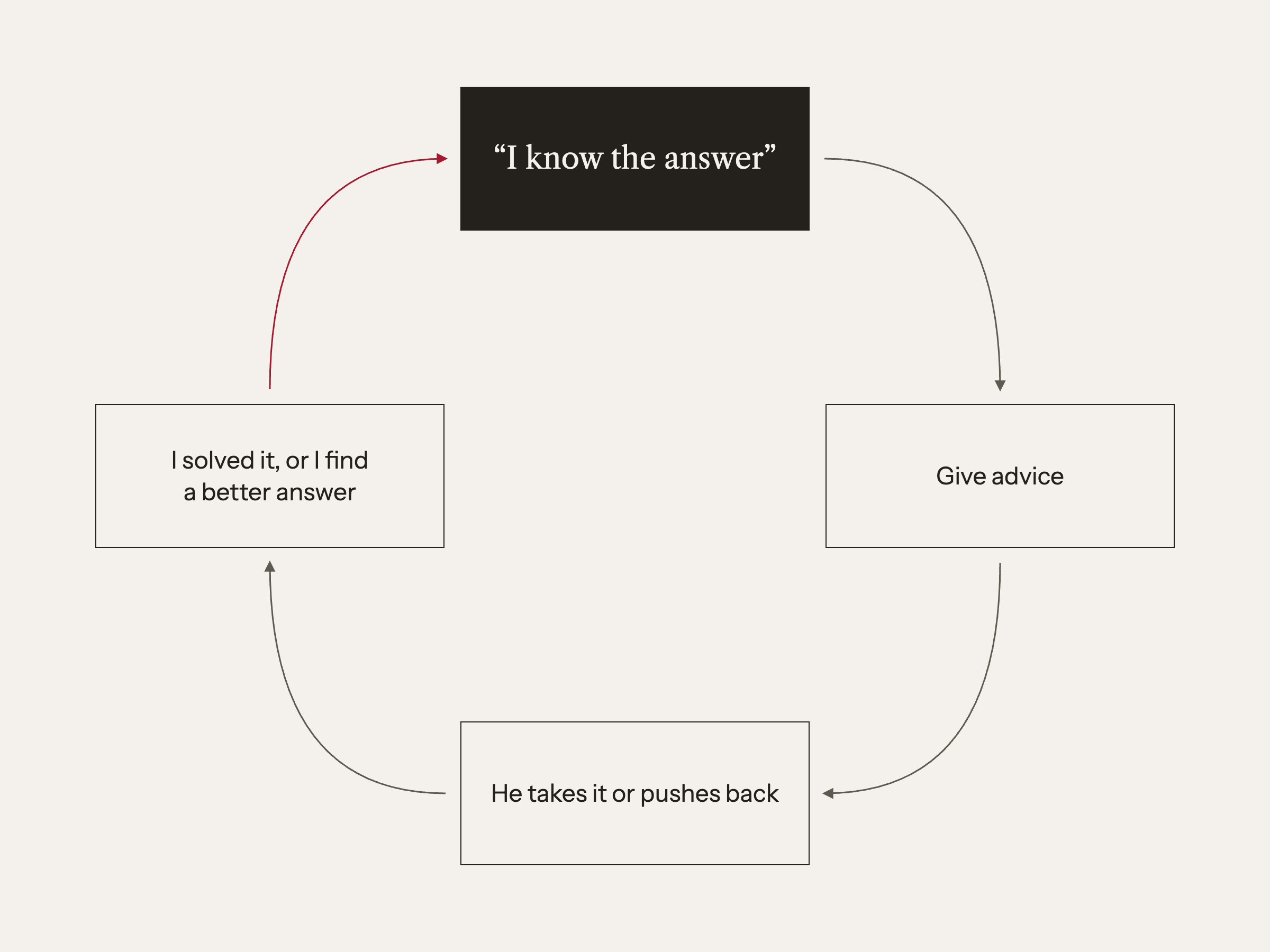
Had we kept going, the loop would have kept going too. He takes the exercise, or he tells me why it won't work and I find him a better one. Then I have the answer again.
After my coach pointed this out, I became painfully aware of this 'I know the answer' loop in my coaching for the next year. I learned to catch it and set it aside, and get curious about the other person's legacy loop instead. Now, I would ask him how he gets to a place of overwhelm like this, so we can understand the whole loop.
I've been both people on that call.
Your turn: Which problem do you keep solving that keeps coming back?
PS: That CEO continued to work with my coach on the same problem for some time. Last I heard, he grew his team and has more free time than before. Amazing what understanding the hidden loops can do!